Confounding Variables
The text below is a transcript of the video above, edited with AI assistance for clarity and flow. Where the two differ, the video is the authoritative version.
You’ll learn to
If you want to be able to critically assess claims made with quantitative data, this is one of the most important concepts that you should understand. In this video you will learn to:
- Define a confounding variable.
- Explain why correlation doesn’t imply causation by referring to confounding variables.
Health care spending and greenhouse gas emissions
Let’s start with a research question. Imagine a researcher who is concerned about the potential drivers of greenhouse gas emissions and is trying to think of policies to mitigate climate change.
- Research question: Does spending more in health care cause increases in greenhouse gas emissions?
- Hypothesis: More health care spending causes greenhouse gas emissions to increase.
Hypothesis
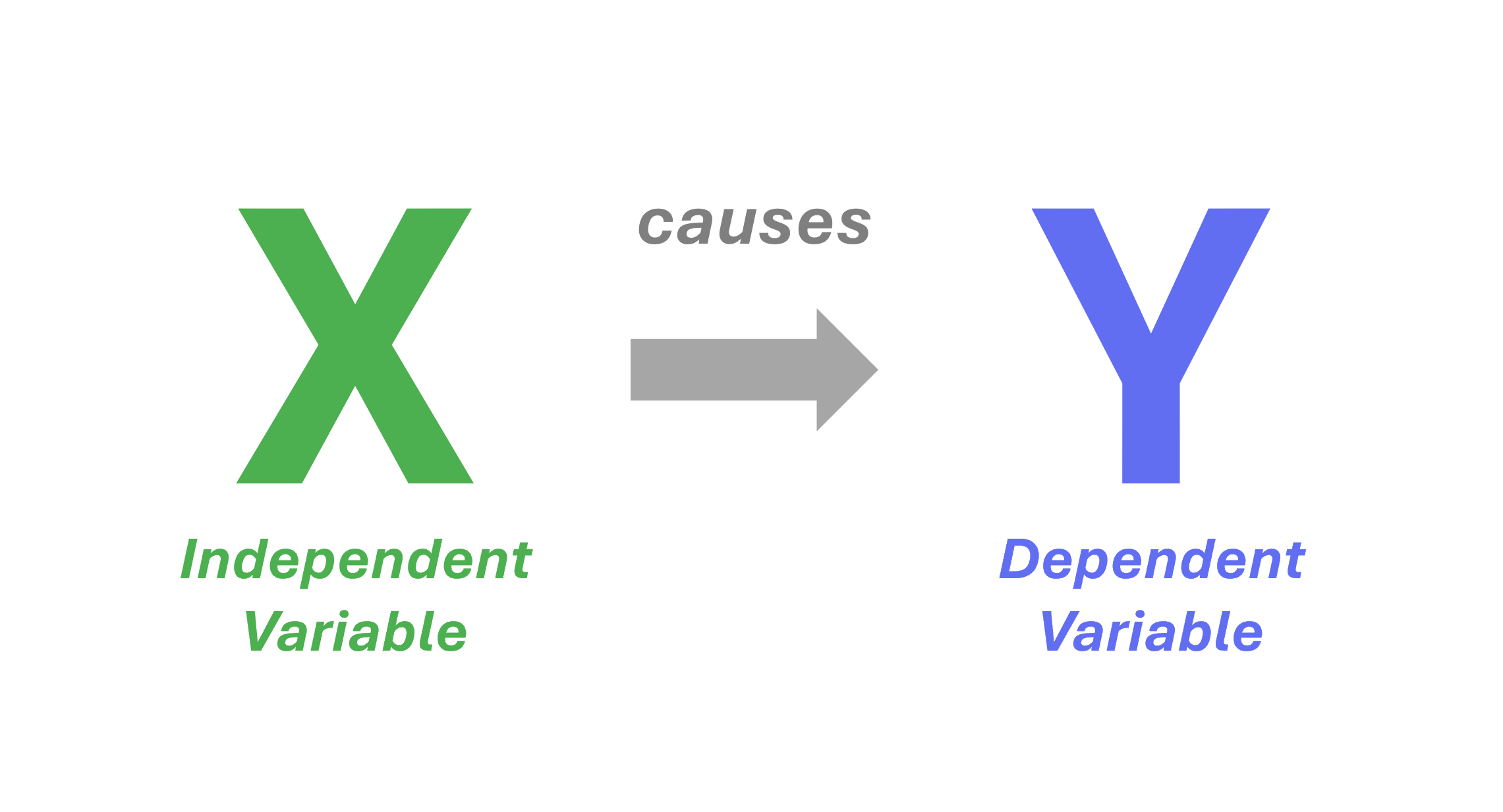
The hypothesis has an independent variable driving change in a dependent variable: an independent variable causing a dependent variable.
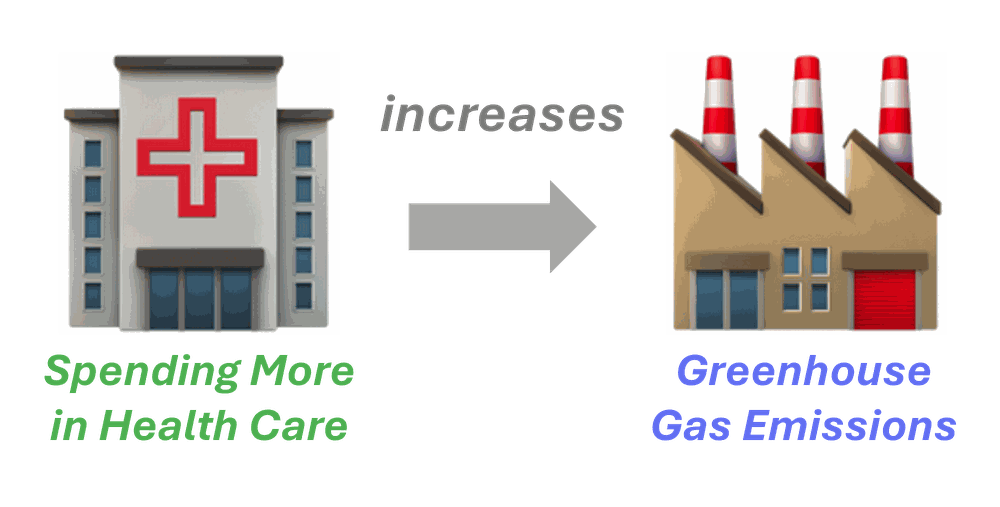
In this case, spending more in health care is the independent variable. As the hypothesis states, doing that increases greenhouse gas emissions.
A positive correlation
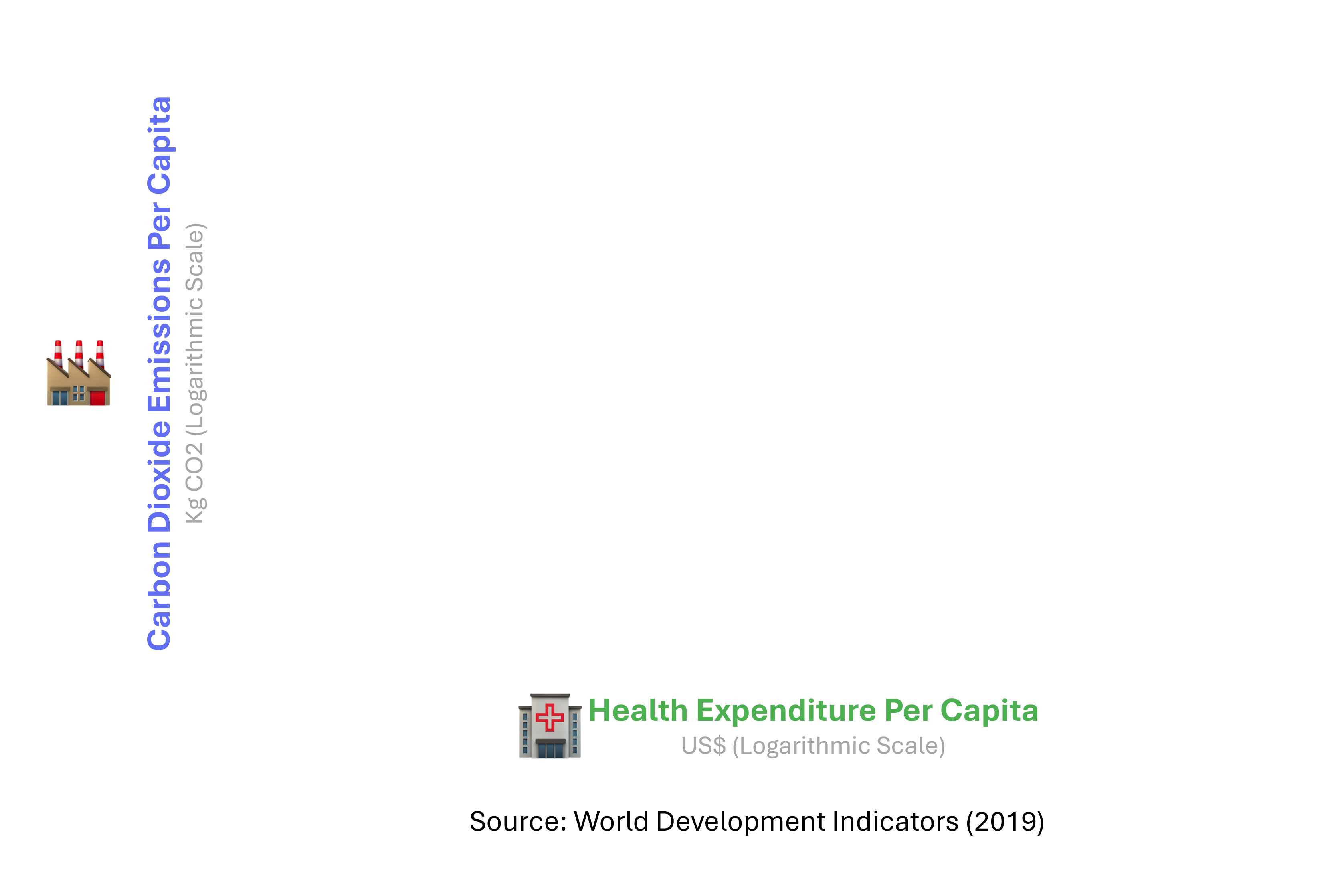
Suppose that the researcher then comes up with a scatterplot and estimates a regression. The scatterplot has health expenditure per capita on the x-axis and carbon dioxide emissions per capita on the y-axis. Both quantities are on the logarithmic scale.
This is the actual data from countries. Each dot is a country. There is a very clear positive correlation, and the regression is statistically significant.
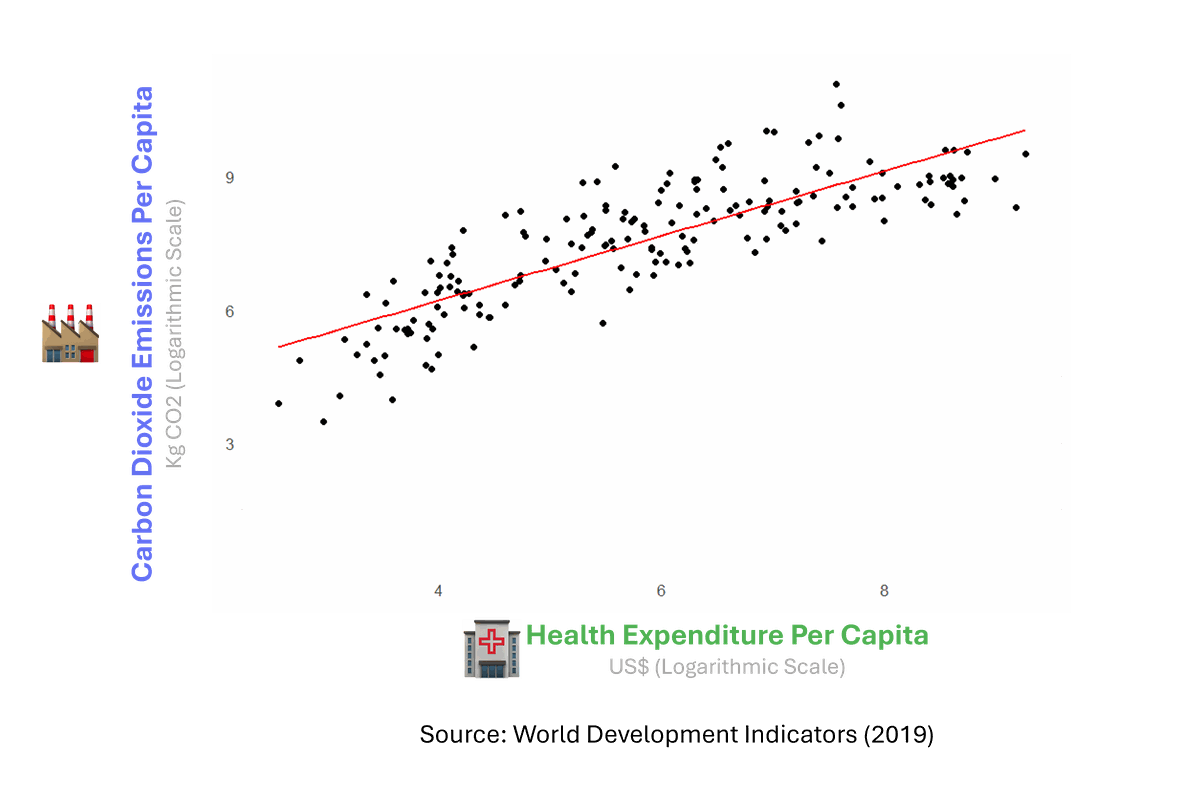
This could lead one to conclude that yes, countries should cut their health care spending if they want to mitigate climate change.
A confounding variable
The problem with this claim is that it fails to account for a confounding variable. A confounding variable here would be national wealth.
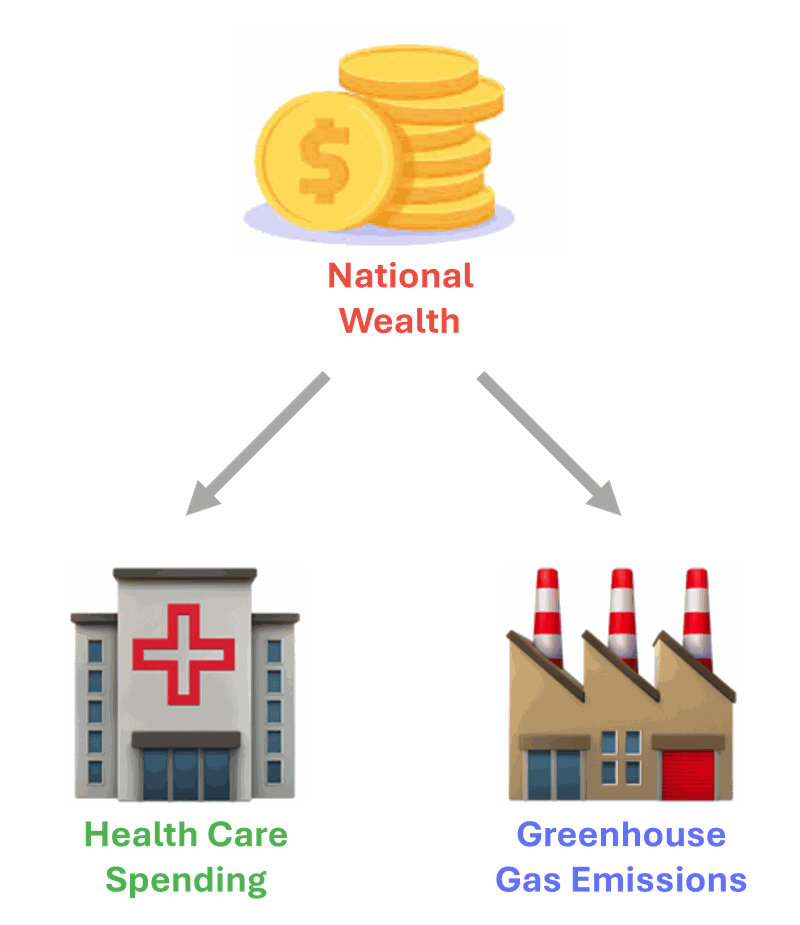
When you look at different countries, you do observe that countries that spend more in health care emit more pollutants. But you should also expect richer countries to do both things: to spend more money in health care because they can afford it, and to emit more carbon dioxide because richer countries consume more energy. All else equal, that is going to result in more emissions of carbon dioxide and of greenhouse gases in general.
Once you take that into account, you should start questioning the premise that there is a causal relationship between health care spending and greenhouse gas emissions. We do see a correlation, but that doesn’t mean that one thing is causing the other.
Definition
A confounding variable:
- Affects the dependent variable.
- Affects the independent variable.
- Is not a result of the independent variable.
National wealth checks all of these boxes in this context. Number three is very important. Not being a result of the independent variable is the criterion that distinguishes a confounding variable from a mediator, or mechanism.
Confounders vs. mediators
Let’s draw this distinction, so that the difference between a confounder and a mediator is clear. Focus on the third criterion: a confounding variable is not a result of the independent variable.
A confounder influences both X and Y from outside of the relationship between X and Y. A mediator is within the causal chain: it is something that is caused by X and then causes Y. It is a channel through which X causes Y. So mediators are part of the mechanism; they are not confounders. A mediator is a different concept, and it is very important to keep that in mind.
An example of the distinction
Think about education and crime. A community having more access to educational opportunities could reduce crime via increasing the income of the people in that community. In that case, education could increase income, which would then decrease crime. Higher income here is in the middle of the causal pathway, not outside of it: education, then income, then crime. That makes it different from a confounder. A confounder would affect both crime and education independently, not as a part of this causal chain.
Omitted variable bias
Another important related concept is omitted variable bias. Omitted variable bias and confounding variables are intertwined.
When a confounder is left out of the analysis, we can be misled by the data. In our example, when we just look at the correlation between health care spending and greenhouse gas emissions without taking national wealth into account, we can be misled into thinking that more health care spending leads to more greenhouse gas emissions. The relationship between the independent variable and the dependent variable may appear causal when it is not.
That is called omitted variable bias. When you fail to account for potential confounding variables, for a variable that is being omitted from the analysis, you can get this type of bias: you can be misled into seeing causality where there could be none.
Omitted variable bias: the healthcare example
In the healthcare example, national wealth is being omitted. When national wealth is omitted, spending might appear to cause emissions. But once wealth is accounted for, the relationship may disappear.
This is why bivariate regression is often not enough. This is why looking at correlations is often not enough. It is one of the reasons why correlation doesn’t imply causation.
Recap
- A confounding variable affects both X and Y, the independent and the dependent variable, and is not caused by X.
- Confounders can create correlations that look causal but are not. If you look at those correlations without taking the confounding variables into account, you might be misled into thinking that there is a causal relationship.
- Identifying confounders is essential before drawing causal conclusions from an observed correlation.
Why this matters
A lot of data in political science, and in the social sciences in general, is observational, not experimental. Causal claims in public debate, such as those you see public officials making when you read the news, are a lot of the time based on just correlations between two variables. Recognising possible confounders is a way to critically assess those claims, and to be able to push back against claims that might be made in public debate.